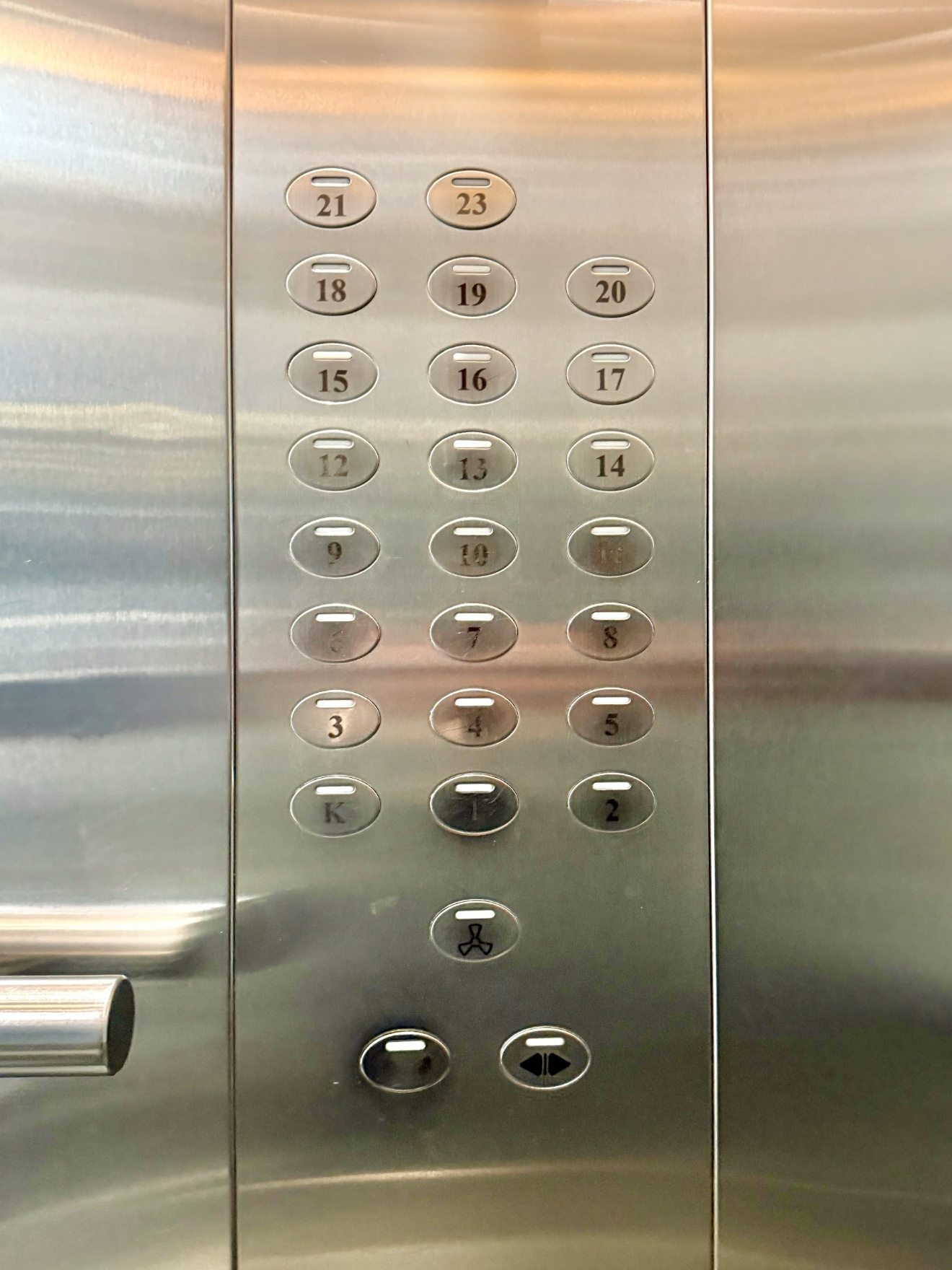
It is around 8:56, and the first meeting is about to start. Even though the building has plenty of elevators, people are migrating from floor to floor — just not from the level you happen to be on. The morning was perfect: the kids got out the door in time, the train connection was like clockwork, and now this.
The elevator arrives.
You act calmly, letting all the colleagues stroll in while all of you nod and smile. The final person jumps in. Eight people. You need to get to the 12th floor. You can see from the pressed floor numbers that you will not make it in time. You move yourself strategically next to the buttons. On every floor, once a colleague has exited, you press the close-door button with conviction and receive a satisfactory nod from the others. Things are under control. The elevator is moving. You make it almost on time, while others are still finding their places and welcoming each other.
Everything is once again perfectly under control.
The close-door button in most elevators has been non-functional since the 1990s. Manufacturers kept installing it because people who feel in control are calmer, less stressed, and easier to manage. The button does not close the door. It closes the gap between how powerless you are and how powerless you are willing to feel. Harvard psychologist Ellen J. Langer calls this perceived control – the illusion is the design. 1
The most worn button in our elevator does nothing. It is just very good at its job.
Bec Crew, “The ‘Close Door’ Buttons in Elevators Don’t Actually Do Anything,” ScienceAlert, November 1, 2016, https://www.sciencealert.com/the-close-door-buttons-in-elevators-don-t-actually-do-anything. ↩︎