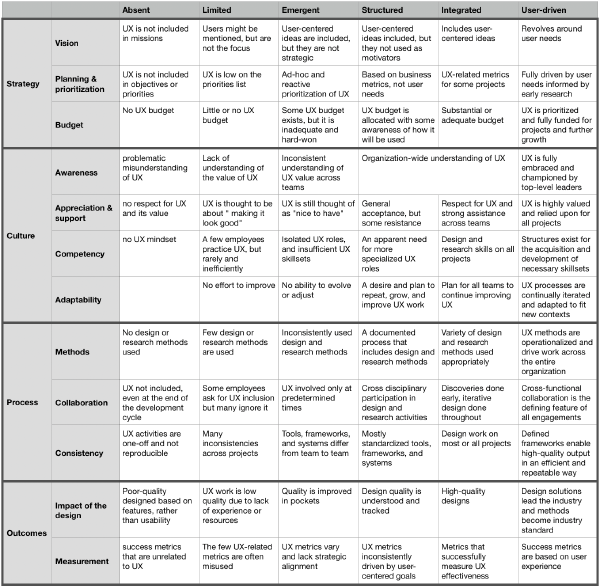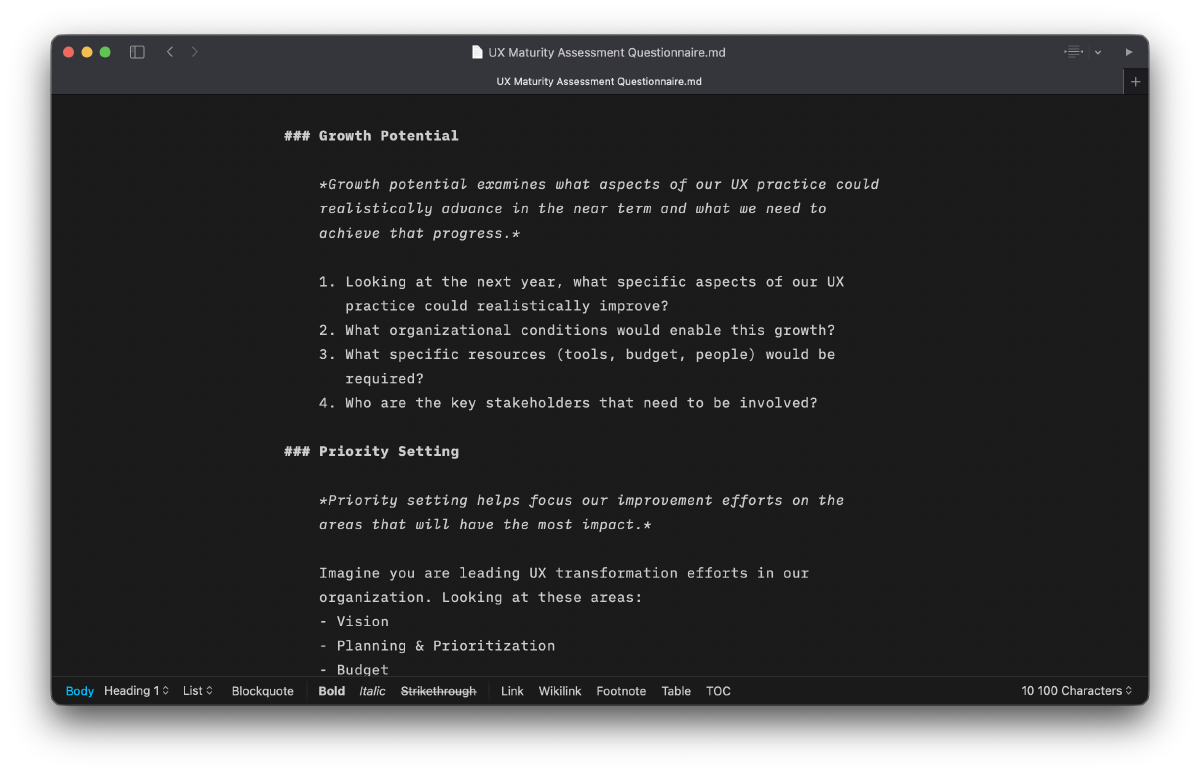
In 2023, I sat down with each member of my UX team and asked them to rate our organization’s maturity – dimension by dimension, level by level. The method, based on Nielsen Norman Group’s UX Maturity Model,1 combines quantitative ratings with qualitative, action-oriented questions. This process gave me clarity I wouldn’t have reached otherwise.
I repeated the assessment in 2025. This time, I expanded it to include the broader Product Development organization – Chief Product Owners, Product Owners, Tribe Leads, Team Leads, and Business Developers. Repeating it revealed something a single measurement never could – progress.
What repeated measurement shows
This means I can assess not just what changed but also why it happened. Some changes happened surprisingly fast. Some resulted from my own decisions. Others were influenced by factors I hadn’t expected. Seeing all of this in one place is a different kind of insight.
The most revealing signal was how the feedback itself changed over time. Years ago, it was general – we need more designers. Now it is specific: usability tests are taking longer than expected, and UX designers are blocked waiting for results. This change shows several things at once: colleagues understand our processes and different roles; teams have learned to include research time in their planning; estimates of research and design activities have improved. Even when a current project has issues, I can see that the team has moved from a narrow, UI-centric approach to a more mature and structured level. Three areas in particular catalyzed this shift.
In organizations with lower maturity levels, this assessment requires caution. Vocabulary around design is not yet developed, and feedback often focuses on solutions rather than root problems. Developing that language takes time and deliberate effort – and that shared vocabulary takes time to develop.
A single measurement gives you a position. A repeated one gives you a direction.
Kara Pernice, Sarah Gibbons, Kate Moran, and Kathryn Whitenton, “The 6 levels of UX Maturity,” Nielsen Norman Group. ↩︎