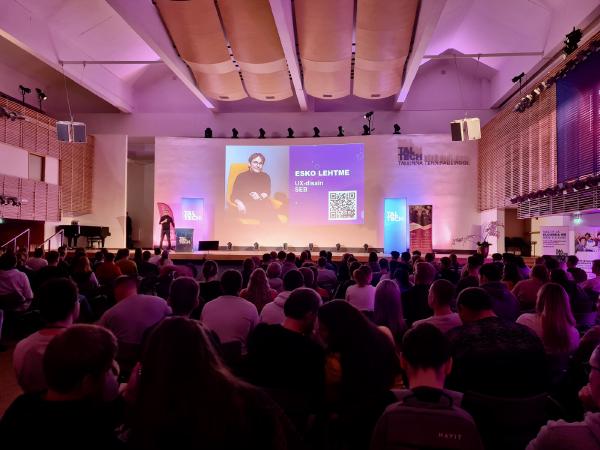
My notebook from May 22, 2016 has Kara Pernice’s1 name at the top of the page and, in the margins of the first hour of that day-long session, two live projects sketched out with their top tasks, clarified business metrics, and tactics for measurement.
I had spent the week at NNG’s UX Conference in Amsterdam, six training sessions across five days. I had gone expecting confirmation. Kara’s session was called UX Basics, and I was a practitioner with years of project work behind me – conducting workshops, observing users in their everyday work, interviewing stakeholders, mapping customer journeys. I was running on adrenaline as projects came and went, and somewhere in that rhythm, the work had become routine. I had read the books. I had information.
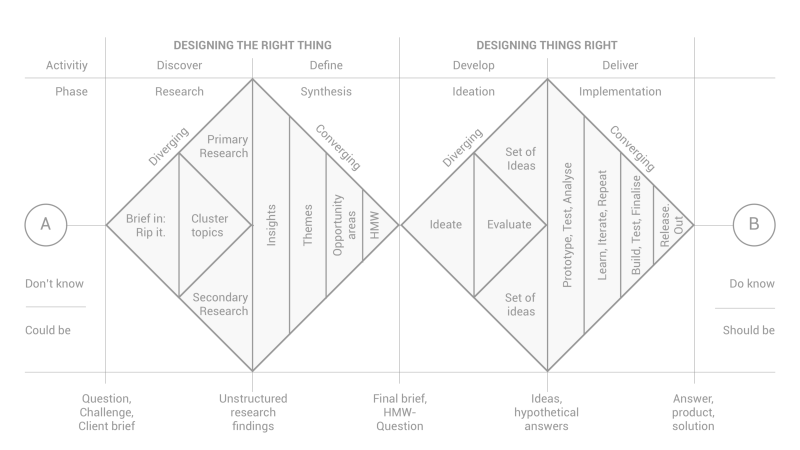
What I didn’t have – and couldn’t see from inside my own practice – was a clear picture of when and how to apply it, and a clear picture of what was still absent. I had built real skill in the solution space and had significant gaps in the problem space. The second diamond was solid. The first diamond was where I was weakest. And I hadn’t known to look.
Slide 20
In the first hour of the day, the session stopped being a review. The slide title was “Business rules affect UX too.” The example was a Nordstrom page – free shipping, always, as a business decision made upstream of any design work. The point was precise: a single business rule had shaped what users experienced more than any design choice on that page could. UX doesn’t exist in isolation from the business logic surrounding it. Kara connected design to NPS, to sales, to time saved by employees, to decreased operational costs – as measurable outcomes at each stage of the process in addition to abstract ambition.
I had been solving problems. She was describing impact.
In the margins of my notebook, I started mapping those metrics onto the two projects I had open at the time.
Design leadership insights in your inbox
From my practice, with each new post. Quarterly exclusives from my practice.
The invisible ceiling
This is the specific danger of self-taught expertise: you develop judgment about the things you have encountered, and you develop none about the things you haven’t. The books gave me vocabulary. Projects gave me practice. One thing I hadn’t noticed: I was routinely entering user research without a defined research question. I could conduct the sessions. I didn’t always know, before starting, what they were supposed to resolve. The gap between having information and knowing how to apply it is exactly where growth lives. It requires contact with practitioners who have already navigated the same field, with structured education that names what you have been doing intuitively, with something outside the loop of your own experience. Without it, improvisation feels like mastery. Confidence closes off the question of what you still don’t know.
The other diamond
Back at CGI, improvisation got a structure. I constructed a process for how and why to do anything – what the outcome of each step was, when to use which method, what the question was before the method could answer it. The difference was not the individual techniques. The difference was understanding why each one existed in the sequence and what it was trying to resolve. That shift in thinking followed me to SEB. The real impact came in two roles.
As a UX designer there, I developed a different approach to collaborating with developers and started bringing the customer voice into discussions. The customer voice became a regular practice – systematic work with users, translated into something the team could see and respond to. Stakeholders had trusted my words before. After they had seen completed research – actual evidence of how customers saw our product offerings – they trusted what the customers said.
When I moved into the Head of UX role, the same logic operated at a different scale. I focused on rebuilding the design practice by integrating design into the product development process – making the case to developers for the time designers need before development begins, and working with stakeholders to establish user understanding as a regular input, not an occasional event. Making the work visible was more effective than making the argument.
The NNG UX Certificate2 is dated May 27, 2016. It is a small token with a meaning that has compounded in the ten years since. The notebook from that week is still on my shelf. Kara Pernice’s name at the top. Two projects in the margins. I went in expecting confirmation and left with a different picture of my own practice. That shift – from confident to aware – is the one that actually compounds. It happens faster when someone helps you see it from the outside.
“Kara Pernice”, Nielsen Norman Group. ↩︎
“UX Certification”, Nielsen Norman Group. ↩︎