In the summer of 1911, a newspaper, Tallinna Teataja, made a small confession to its readers: the editorial office had started using a strange word – hapukurgihooaeg, the pickle season – and nobody knew where journalists had picked it up.1
That confession is charming. A newspaper admitting, in print, that it does not know something. And it is misleading, in the most innocent way. The word looks like newsroom folklore. Follow it far enough, and you find a set of business decisions so sound that most content teams today would recognize every one of them – they just use different vocabulary.
A word borrowed from hungry Berliners
The Estonian term is a direct loan from German. Sauregurkenzeit – sour cucumber time – came into use in the late eighteenth century and originally described a season of scarcity: the stretch of the year when there were pickles on the table and little else.1 Only later did German newspapers adopt it for their own journalistic scarcity season, the weeks when politics goes quiet, and pages still must be filled.
The English had their own cucumber, and it belonged to the tailors. A slang dictionary from 1700 defines cucumber time as the tailors’ holiday – nobody ordered suits, and cucumbers ripened. Tailors were even mockingly nicknamed cucumbers.2
Dutch has komkommertijd, Hungarian has uborkaszezon, and Norwegian has agurktid. The English press eventually chose a blunter name – on July 13, 1861, the Saturday Review mocked the Times for the nonsense it printed once its best writers left for Scottish moors, and called those months the silly season.3 And Swedes and Finns went darker, rötmånad and mätäkuu, meaning the rotting month.
Same phenomenon, three metaphors: hunger, idleness, decay.
Empty front page
In August 1817, residents of Gloucester, Massachusetts, reported a sea serpent in the harbor. Within weeks, hundreds claimed to have seen it. The Linnaean Society of New England appointed a formal committee, took sworn depositions, and gave the unseen animal a scientific name – Scoliophis atlanticus.4 No specimen was ever captured.
Sea serpents became such a reliable summer genre that Estonian media historians Roosmarii Kurvits and Tiit Hennoste list them first when defining pickle-season news, alongside three-headed calves and kangaroos in Estonian forests – all genres that appeared in Estonian newspapers.1
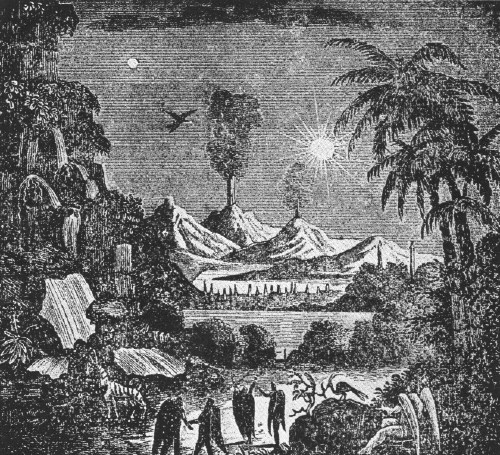
In August 1835, the New York Sun ran six articles describing life on the moon. Blue unicorns, two-legged beavers, winged bat-people, and a temple of sapphire. All observed by the astronomer Sir John Herschel.5 A delegation of Yale scholars traveled to New York to verify Herschel’s reported discoveries. The Sun’s staff sent them back and forth between the printing office and the editorial office until the professors gave up and went home.67

And in July 2023, authorities near Berlin spent two days hunting an escaped lioness with helicopters, drones, and night-vision equipment. Expert analysis of the only video concluded the animal was, in all likelihood, a wild boar.8
Newspapers still run endless stories about sharks, wildfires, and diseases spread by insects.
The practical side of the pickle season
The mechanisms in this post, turned into something you can use for your own publishing calendar. That is what the newsletter is for.
Five business mechanisms
1. Habit protection. A newspaper’s real product was never the individual news item – it was the daily reading habit. A subscriber who spends August without opening the paper has to be won back in September, and winning a reader back always costs more than keeping one mildly entertained. The sea serpent was retention. Modern media run the same playbook and call it churn prevention.
2. Advertising inventory. Papers sold advertising space in advance, and advertisements need editorial content next to them. The three-headed calf was packaging for the ad column. The direct descendant of this mechanism is content marketing and employer branding on social media.
3. Cheap customer acquisition. The Moon Hoax was, structurally, a growth campaign. The Sun used spectacular absurdity to pull readers from rivals, then immediately declared itself the most widely read newspaper in the world.5 That claim attracted advertisers to the paper.
4. Low-risk experimentation. Offices were staffed by junior writers. The pickle season functioned as the research lab – a period when failure cost little because expectations were low. Any organization that wants innovation needs a season, a channel, or a budget line where being wrong is affordable. The media already has one built into the calendar for the slow summer months. The sharks, wildfires, and insect-borne scares that resurface every summer are proof the format works – a genre invented once, in a season nobody was watching, and repeated ever since.
5. Attention arbitrage. When every competitor goes quiet, visibility gets cheap. The Berlin lioness earned two days of helicopters and drone footage for what turned out to be a wild boar – a story that would not survive thirty seconds of competition in any other month. The same asymmetry exists on every content platform today – publishing when others pause buys reach at a discount.
Pages that had to be filled, subscribers who had to stay, presses that could not stop. The pickle season looks like a joke about journalism. It is closer to a case study in running a business through multifaceted demand.
Airika Harrik, “Lugeja küsib: kust tuleb väljend “hapukurgihooaeg”?,” ERR Novaator. ↩︎ ↩︎ ↩︎
Michael Quinion, “Cucumber time,” World Wide Words. ↩︎
“Meaning and origin of the phrase ’the silly season’,” Word Histories. ↩︎
Joe Nickell, “Gloucester Sea-Serpent Mystery: Solved after Two Centuries,” Skeptical Inquirer. ↩︎
“The Great Moon Hoax (1835),” Museum of Hoaxes. ↩︎ ↩︎
"‘The Great Moon Hoax’ is published in the ‘New York Sun’," HISTORY. ↩︎
Images via “Great Moon Hoax,” Wikimedia Commons – public domain. ↩︎
“Berlin area lion search called off; officials say it might’ve been a wild boar,” NPR. ↩︎